I Was Going to Take a 3-Year Break from Theology (And Ended Up Starting a Doctorate)
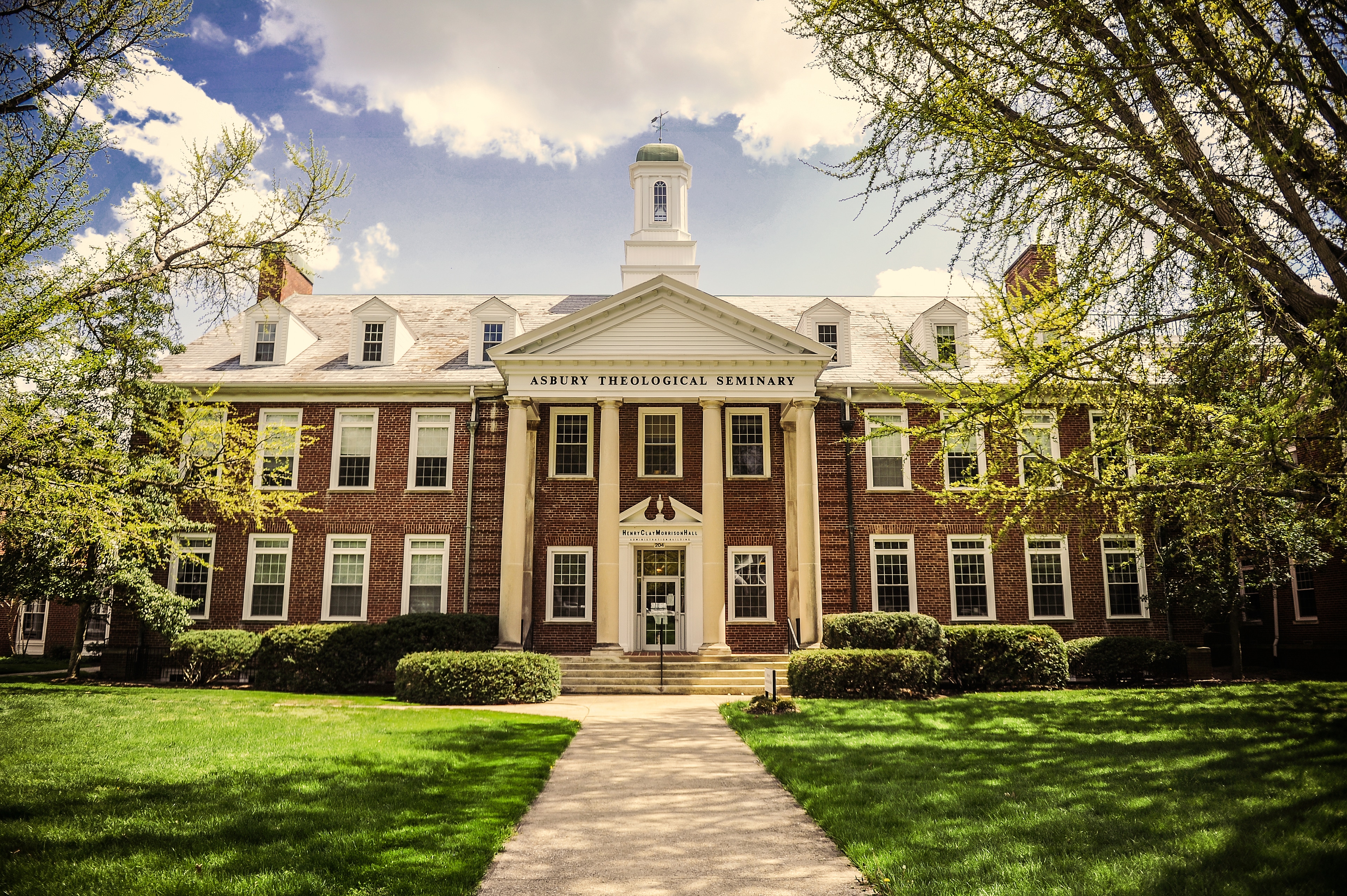
I had promised myself that I would take at least a three-year break from theological studies, but…
Two months later, I found myself writing five academic essays in under 48 hours to apply for a doctoral program.
Here is the story of how my plans changed and ended up studying a Doctor of Ministry (DMin).
The Original Plan
In June of this year, I finished my Master in Theology and Ministry (MATM) at Fuller Theological Seminary.
It had been three years of intense study, a lot of effort, and financial sacrifice. While being a full-time pastor at Rompiendo Fronteras at the same time with being a full-time student, turned out to be deeply enriching yet physically and mentally exhausting.
That is why I decided to take a break from academic studies.
I also wanted to alleviate my financial pressure and have more quality time to focus on my family and local ministry at church. My plan was to wait at least three years before taking the next academic step.
But maybe God had other plans.
The Dilemma: PhD or DMin?
For a long time, the biggest question holding me back from applying to doctoral programs was deciding which kind of program to take: a PhD in Theology or a Doctor of Ministry.
Let me explain the difference:
1. The PhD in Theology (or Biblical Studies)
This is the highest level of pure academic research. But:
It takes at least six years of full-time commitment.
It demands roughly 50 hours of work per week.
It requires proven mastery of Hebrew, Greek, and other research languages (like German and French, on top of English).
And the main problem for me: It requires full-time, on-campus residency at the seminary.
If you ask me honestly, my dream has always been to pursue a PhD focused on the New Testament!
However, taking that decision meant stepping down from my pastoral role at Rompiendo Fronteras Church and relocating my family to the United States. And I am sure that is not God’s will for our family in this season.
2. The Doctor of Ministry (DMin)
This is what is called a professional doctorate, specifically tailored for leaders and pastors who remain active in full-time ministry.
Unlike a PhD:
You do not have to relocate or step away from your active ministry.
It provides flexibility, you have to stay only one-week annually on-campus for intensive seminaries, and the rest of the year you have online coursework and independent research.
Programs are organized into specialized cohorts centered on a core theme (church planting, preaching, spiritual formation, pastoral counseling, etc.).
So, amid my “little frustration” of not being able to pursue a PhD right now, I was sure that I would only do a DMin if I find a cohort that genuinely I would be passionate about.
And that is when I found this program:
What Changed Everything
Well before graduating from my master's degree, I had found a cohort at Asbury Theological Seminary that caught my attention:
"Spirit Led Church: Pentecostal Theology", led by none other than Dr. Craig Keener.
Keener has been one of my favorite theologians and authors for years. He is not only one of the most respected New Testament scholars in the world, but also he is widely known for his deep openness to the charismatic work of the Holy Spirit. (If you have never read him, I recommend any of his books).
However, the problem was that this cohort was set to begin just two months after I finished my master’s degree. Consequently, I never saw it as a viable option.
Then came August.
I received an email in my inbox,
It was an invitation to apply for the final spots of this exact cohort.
I experienced that Mexican "¿y si sí?" moment—that sudden impulse of "what if it actually works out?"—and hit reply.
The admissions team wrote me back immediately: “If you can complete your entire application within the week, you can still get in.”
I felt a movement deep inside. Talked with my wife—I think she is crazier than me, because she immediately said: “Yes, do it”—and I started the application.
I didn't know the application required five rigorous academic essays. And I had just three days left.
So, I locked myself in my office, and within 48 hours, I wrote and submitted all five essays.
Now, the only remaining obstacle was the finances.
I applied for institutional aid and was awarded a 50% scholarship (the maximum granted by the program). While it still represents a real financial stretch for us, it is a great help and relief for me. I am deeply grateful to God and to the team at Asbury for this opportunity.
The Road Ahead
Now, for the next 3 to 4 years, I will be dedicating my research to a single focus: how we can build healthier, biblically grounded churches that operate in the fullness of the Holy Spirit.
In my next post, I will share more details about my doctoral thesis topic and the specific questions we will be exploring together in this space.
Before you go...
Building healthy, Spirit-led churches isn’t something we do in isolation. I’d love to hear your thoughts:
Drop a comment below: What do you think about academic formation for ministry?
Found this helpful? Restack it on Substack or share it with a pastor, leader, or theology nerd who needs it.
Until next Friday, keep leading with both truth and power.
Blessings,
J. M. Proudinat
Pastor & DMin Candidate