Neither a TED Talk nor a Miracle Show
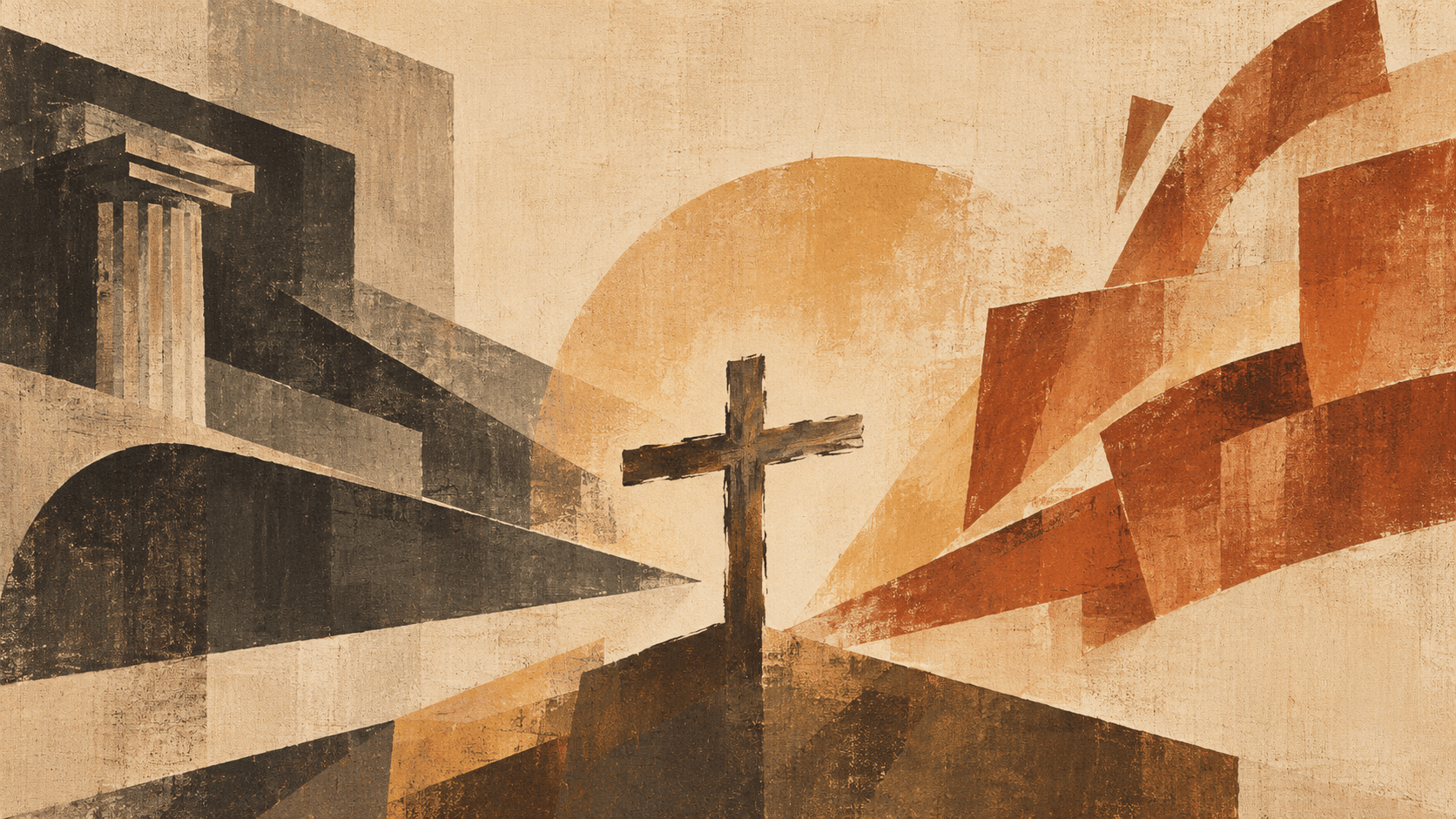
“My message and my preaching were not with persuasive words of wisdom, but with a demonstration of the Spirit and of power, so that your faith would not rest on the wisdom of men, but on the power of God.” (1 Cor. 2:4–5)
1 Corinthians 2:4–5 has been one of the most widely used passages in charismatic circles to conclude that preaching must always be accompanied by signs and miracles to be effective.
Others have found in this passage an excuse for their lack of preparation in preaching, thinking that all that matters is to “depend on the Holy Spirit.”
But what is Paul actually trying to say? What should our preaching look like in light of this passage?
Right now, we live in a tension between extremes when it comes to preaching.
In intellectual pulpits, we’re taught that the “healthy” and “correct” thing is expository preaching with deep exegesis—showing that the preacher spent hours studying the passage to communicate what the Bible truly says.
Others believe preaching should be clear, built on good storytelling, and relevant for people who are just starting to explore faith. The less “religious” it sounds, the more effective it will be to connect with culture and present the Gospel properly.
That’s how we find preachers competing with the best TED Talk speakers. Clips from their sermons easily go viral because they’ve developed great persuasive communication skills.
In more charismatic circles, on the other hand, it’s often assumed that if the sermon doesn’t end with people falling to the floor, weeping, specific prophecies and words of knowledge, or instant miracle testimonies, then “God wasn’t there” and “it was just human talk.”
The reality is that all these views fall into the exact same idolatrous trap: believing we need “something” to capture the listeners’ faith more than the simple message of the Gospel—whether that’s the depth of our exegesis, our eloquence, or miracles themselves.
Yet when Paul wrote that our faith shouldn’t rest on human wisdom, but on God’s power...
No, that doesn’t mean our faith should rest on charismatic expressions of God’s power.
It’s something much more radical and deep.
The Two Idolatries and the Two Thieves of Faith
When Paul writes to the Corinthians, he says he is wrestling with two kinds of idolatry:
“For indeed Jews ask for signs and Greeks search for wisdom” (1 Cor. 1:22).
One group was looking for “miraculous signs,” while the other was looking for “wisdom” like the Greek philosophers of the day or the grand rhetoric of the Sophists.[1]
Today, we do the exact same thing: we look for the church with the miracles, the one with the deep preaching, or the one with the most popular preacher.
The problem with these extremes is clear:
On one hand, when we rely too much on the rhetoric of our preaching, we can easily confuse genuine conversion with an emotional reaction that could just as easily come from a good sales technique, a TED Talk, a motivational speech, or a persuasive communicator.
On the other hand, if we believe faith only happens when people see miracles, we run the risk of creating environments driven by suggestion and crowd hype—where emotional experiences, shouting, visual shock, or hasty testimonies take over. Worse, the focus centers more on the “anointed” preacher than on Christ (which ironically means “Anointed”).
The problem is that all of this ends up nullifying the power of the cross of Christ (1:18).
In both models, people’s faith ends up built on the leader’s eloquence or their perceived “power.”
When the emotional atmosphere fades, or the miracle they were waiting for doesn’t happen, their faith collapses.
Paul’s Model of Preaching
When Paul arrives in Corinth, he says he deliberately decided not to follow the persuasive methods practiced by the city’s speakers.
He refused to give a “TED Talk.”
He didn’t show up with wise or eloquent words (1 Cor. 2:1), nor did he come projecting an image of greatness, success, and corporate confidence.
Instead, he showed up in weakness, fear, and much trembling (2:3).
That was completely unexpected. It went against everything that culture considered “wise” and “powerful.” In the first century, Greek orators were the celebrities of the day: they charged fortunes to manipulate audiences with drama, theatrical flair, and grand rhetoric.[2]
Paul made a scandalous decision: he refused to play that theatrical game.
Instead of preaching a mega-elaborate message, he dedicated himself to preaching one single thing: “Jesus crucified.”
A message that was completely repulsive to the standards of his time.
To understand this, you have to understand the Roman world of the Corinthians, where the cross was a symbol of Roman domination and humiliation. Crucifixion was the worst possible way to die in the ancient world:
Cicero called crucifixion “a most cruel and ignominious punishment” and “the most miserable and most painful torture, appropriate to slaves alone” (Against Verres 2.5.64, 66).
Josephus referred to crucifixion as “the most wretched of deaths” (Jewish War 7.203).
Quintilian reported: “When we crucify criminals the most frequented roads are chosen, where the greatest number of people can look and be seized by this fear” (Lesser Declamations 274).[3]
The only way anyone considered the cross as “wisdom” or “power” was in the hands of the executioners who wielded it. The idea that God would use the cross as the instrument through which the Messiah would fulfill His purpose sounded absurd to everyone.
Instead of projecting an image of power, Paul showed his vulnerability.
The text itself doesn’t specify in what sense Paul showed weakness. That “weakness” could refer to his unimpressive physical presence and speaking style compared to eloquent preachers like Apollos (2 Cor. 10:10); it could refer to a visible physical condition or illness[4] (cf. 1 Cor. 11:30); or simply to his personal feeling of inadequacy to preach the Gospel in that city (2 Cor. 2:16).[5]
No matter what his “weakness” meant, the point is that he was not what anyone would expect from a popular speaker.
What Paul is doing is dismantling everything Corinthian culture considered “wise” and “powerful” to emphasize one single point:
“Christ the power of God and the wisdom of God.” (1 Cor. 1:24)
What is God’s wisdom? Christ.
What is God’s power? Christ—and Him crucified.
So, What Is the True Demonstration of Power in Preaching?
The greatest power and miracle is that someone can believe the message of a crucified Messiah, and believe that this is how God decided to save the world.
Maybe we’ve grown so religiously used to this message that we’ve lost touch with how irrational it sounds to human logic.
In fact, that’s what 1 Corinthians 1 is all about: God is putting human standards of wisdom and power on trial by showing that His salvation plan was accomplished in the crucifixion of the Messiah—something neither the philosopher nor the scholar of the day could have ever predicted, even with their best reasoning.
God’s wisdom is not like ours.
His power is not like ours.
“For the foolishness of God is wiser than men, and the weakness of God is stronger than men.” (1 Cor. 1:25)
That’s why someone believing the Gospel is a miracle in itself.
So...
What was the undeniable demonstration of the Spirit’s power in Corinth?
In what way was the power of the Spirit demonstrated in Paul’s preaching?
We have to answer this carefully. If we quickly assume that the demonstration of power was “miracles” and that this is why the Corinthians believed, we easily fall into the idolatry of “signs” that Paul himself condemned just a few verses earlier (1:22). This definition has to be understood from the premise that Christ is the wisdom and the power of God (1:24).
Following the thread of Paul’s argument, the most solid interpretation of how God’s power was demonstrated was the conviction the Spirit brought to the Corinthians to believe the message of the cross—a message that made no sense under their own human definitions of wisdom and power.[6]
Still, we cannot assume that Paul was against miracles.
In fact, his preaching was constantly accompanied by signs, miracles, the outpouring of the Holy Spirit, and spiritual gifts (2 Cor. 12:12; Gal. 3:1–5). But as Michael Gorman notes: “the giving of such gifts was not, and should not be, separated from the gift of the power of the crucified Messiah.”[7]
Signs and miracles can be part of the demonstrations of power, but if our trust is in the miracles and not in the crucified Messiah, they can also end up nullifying the cross. The conversion of the Corinthians through the conviction of the Spirit is the very proof of God’s saving power in the message of the cross (cf. Rom. 15:18–19; 1 Thess. 1:5).
Paul’s argument points to this: the greatest demonstration of the Spirit’s power was the radical transformation of the Corinthians. That idolaters, swindlers, drunks, and broken people were forgiven and transformed simply through the proclamation of a crucified Messiah (1 Cor. 6:9–11).
Therefore, when Paul says our faith shouldn’t rest on words of human wisdom but on God’s power, he means our faith must rest exclusively in Christ, the crucified Messiah.
Paul’s intention in stripping away anything that might look wise or powerful by human standards was so that the Corinthians’ faith would rest exclusively on God’s power (1 Cor. 2:5)—which, once again, is Christ. Paul didn’t want their faith placed in an eloquent speech, a powerful presence, or signs in themselves. Just as we can only boast in the Lord, our faith can only rest exclusively in Him.
Ciampa and Rosner summarize this principle brilliantly:
“To have your faith rest on God’s power in the context of 1:18–2:5 is to believe the cross to be the way of salvation, being convinced by the work of the Spirit in your own and other believers’ lives, and to shun any trust in self and human wisdom as a way to God.”[8]
From the Show to God’s True Power
What principle do we learn from this?
That faith only holds up when it’s built on the right foundation.
If the faith and commitment of our church members depend on a preacher’s charisma—whether through their communication skills or the spiritual gifts they display—it’s a weak faith that will easily collapse.
That’s why we must be intentional about making sure our words and attitudes don’t push the message of the Messiah on the cross out of the center. It’s the only safe place our faith can rest.
How Can We Start Seeing God’s True Power in Our Churches?
We need to model and raise up leaders who embrace the Spirit’s power—both in conviction and in signs and miracles—from a cruciform character like Paul’s.
This means a ministry that doesn’t depend on stage presence, on “forcing” emotional experiences disguised as miracles, or on projecting an image of power (even if we claim the Spirit is the source). Instead, it means acting with integrity, serving others humbly, and being willing to show vulnerability as part of the platform where the message of the cross reveals its power.
We must remember that the message of the cross is “form and substance,” and that “the charismatic minister or community must also be cross-shaped.”[9]
That’s what will build churches where miracles happen, but not as ends in themselves. Rather, as part of the transforming power of the cross that bears witness to the power of the resurrection and the new creation born from the crucified Messiah.
Finally, we have to acknowledge the open tensions in pursuing a ministry that embraces the Spirit’s power through weakness.
Giving up on “eloquent words” doesn’t mean settling for mediocrity in communicating the Gospel.
It’s not an excuse for preachers to skip preparation and serious study to be faithful to God’s Word and speak clearly to their context.
Nor is it an excuse to justify a lack of charismatic experiences, signs, and miracles in the life of the church.
This tension invites the church into constant discernment: making sure that good homiletics and our faith to see God work in miracles never replace or sideline the single center of our faith: the cross, the only place where the true wisdom and power of God for salvation are found.
In Conclusion
God doesn’t need a mega-sermon to save the lost.
Nor does He need a miracle show to prove He’s alive.
Next time you walk out of a church service, don’t ask yourself:
“How impressive was the preacher today?” or “How good was the sermon?”
Instead, ask yourself:
“Did I encounter Jesus today?”
The best thing the Holy Spirit can do for you is reveal Jesus.
Before You Go...
This text touches on sensitive issues regarding how we have built church culture over recent decades:
Leave a comment: How could we resolve the tension between great communication, exercise of spiritual gifts without losing the centrality of Jesus as the basis of our faith?
Did you find value in this essay? Hit the ❤️ button, and share it or tap Restack on Substack so this conversation can reach more leaders.
Let’s keep building Spirit-empowered churches shaped by the Cross together.
Blessings,
J. M. Proudinat
Pastor & DMin Candidate, Asbury Theological Seminary
Footnotes
Gordon D. Fee, The First Epistle to the Corinthians, NICNT (Grand Rapids, MI: Eerdmans, 2014), 88.
Bruce W. Winter, Philo and Paul among the Sophists: Alexandrian and Corinthian Responses to a Classical Flourishing, 2nd ed. (Grand Rapids, MI: Eerdmans, 2002), 143–155.
Michael J. Gorman, 1 Corinthians: A Theological, Pastoral, and Missional Commentary (Grand Rapids, MI: Eerdmans, 2025), 112–113.
This is the most likely option according to Fee, The First Epistle to the Corinthians, 98.
Roy E. Ciampa and Brian S. Rosner, The First Letter to the Corinthians, The Pillar New Testament Commentary (Grand Rapids, MI: Eerdmans, 2010), 115.
In agreement here are Ciampa and Rosner, The First Letter to the Corinthians, 118; Fee, The First Epistle to the Corinthians, 100.
Gorman, 1 Corinthians: A Theological, Pastoral, and Missional Commentary, 125.
Ciampa and Rosner, The First Letter to the Corinthians, 119.
Gorman, 1 Corinthians: A Theological, Pastoral, and Missional Commentary, 125–126.